Quiet Quitting: The Stress-Driven Silent Withdrawal
The term "quiet quitting" has become a workplace buzzword, but its core behavior—doing the bare minimum required by the job and nothing more—is rooted in a deep, psychological response to modern work pressure. It's not a literal resignation, but rather a silent, emotional, and psychological withdrawal from work and the intense expectation of going "above and beyond."

photo by Anna Tarazevich on pexels.com
What Exactly is Quiet Quitting?
Quiet quitting is the act of strictly adhering to one's job description and working hours, rejecting the culture of 'hustle' and constant over-engagement. It means:
- No more extra-mile effort: Only completing essential duties.
- Strict boundaries: Logging off on time, refusing to check emails after hours.
- Reduced discretionary effort: Withholding creative ideas, volunteering for extra projects, or helping colleagues outside of core responsibilities.
From a psychological perspective, quiet quitting is often viewed as a self-protective coping mechanism (Serenko, 2024; Zhao & Morgan, 2022). It's a way for employees—across all generations and job types, from blue collar to white collar, to regain control and protect their well-being, often in response to feeling overworked, undervalued, or burnt out.

photo by Karola G on pexels.com
The Link between Accumulated Stress and Quiet Quitting
Quiet quitting doesn't happen overnight; it’s frequently the final stage of a prolonged struggle with chronic, accumulated stress.
Stress in the workplace comes from various sources: excessive workload, lack of autonomy, role ambiguity, poor leadership, and insufficient rewards (Zaki & Al-Romeedy, 2018). While the body and mind can typically bounce back from acute, short-term stress, it’s the cumulative stress—a consistent sense of feeling overwhelmed over an extended period—that causes real damage (Sinha in Yale Medicine).
This chronic stress slowly drains an individual's psychological resources and can manifest in:
- Emotional Exhaustion: Feeling depleted and worn-out.
- Cynicism/Depersonalization: Developing a detached, indifferent, or negative attitude toward one’s job and colleagues.
- Reduced Personal Accomplishment: A feeling of ineffectiveness and low self-esteem.
Quiet Quitting as a Burnout Strategy
The World Health Organization (WHO) recognizes burnout as an occupational phenomenon resulting from chronic workplace stress that hasn't been successfully managed. Many experts see quiet quitting as a direct symptom of or a defense mechanism against burnout (Maslach & Leiter, 2021). When employees are pushed to their psychological limit, their brain is at capacity. Quietly quitting becomes a survival strategy—a deliberate, unannounced withdrawal of energy to simply "stay afloat" without sacrificing income. By setting strict boundaries and reducing effort, the employee is attempting to: conserve nergy, re-establish control and prevent total collapse.
Research supports this link, indicating that work stress is a significant factor in quiet quitting behavior, which is itself closely tied to burnout (Lu et al., 2023; Arar et al., 2023). When the perceived demands of the job exceed a person's physical and cognitive resources, they are more likely to reduce their efforts—i.e., quiet quit.
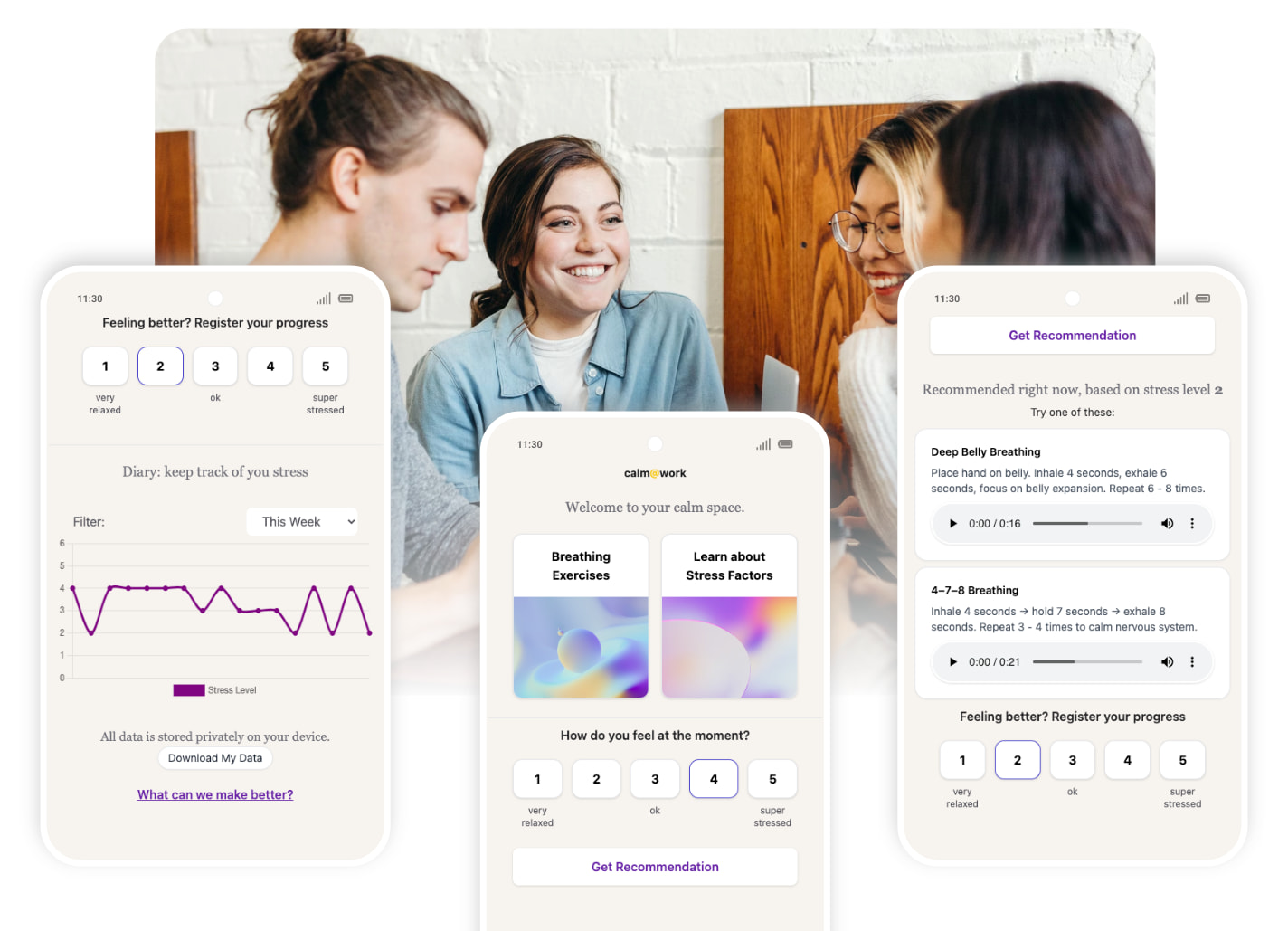
photo by calmatwork.app
Your 1-Minute Stress Relief for Immediate Rebalance
Before stress accumulates to the point of quiet quitting, it's crucial to use small, powerful techniques to re-regulate your nervous system. This 1-minute exercise can be done right at your desk:
The 4-7-8 Breathing Technique
This technique is a powerful tool to calm a "busy brain" and promote relaxation:
1. Exhale completely through your mouth, making a "whoosh" sound.
2. Close your mouth and inhale quietly through your nose to a mental count of four (4).
3. Hold your breath and count to seven (7).
4. Exhale through your mouth, making a "whoosh" sound and count to eight (8).
Repeat this cycle three more times for a total of four breaths. This simple action shifts your body from a "fight or flight" (sympathetic) state to a "rest and digest" (parasympathetic) state, giving you an immediate break from the cumulative stress of your workday.
If you're a blue or white collar worker struggling with daily stress, we recommend you take the next step toward better well-being.
Would you like to sign up for more 1-minute stress relief exercises? Join us.
Manage stress at work without losing focus or productivity.